Driven by the dual forces of the “dual carbon” goals and electricity market reform, commercial and industrial energy storage is becoming a crucial tool for businesses to reduce costs, increase efficiency, and transform their energy structure. This article provides a comprehensive analysis of the core elements of commercial and industrial energy storage, from technical principles to practical applications, aiming to provide objective reference for industry professionals and investors.
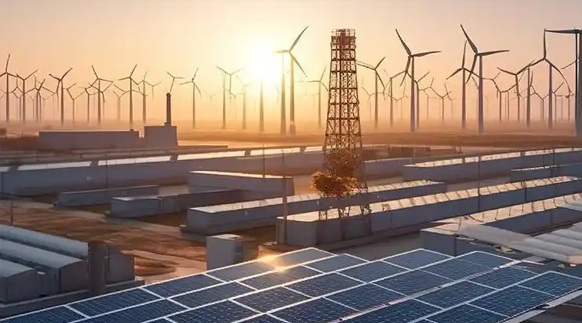
I. System Architecture: The “Hardware Code” of Commercial and Industrial Energy Storage
Commercial and industrial energy storage systems typically consist of four core modules:
Battery System
The mainstream technology is lithium iron phosphate (LFP) batteries, balancing safety and cycle life (usually ≥5000 cycles).
Flexible capacity configuration, ranging from hundreds of kilowatt-hours (kWh) to megawatt-hours (MWh), covering scenarios such as small and medium-sized factories and commercial complexes.
Power Conversion System (PCS)
Enables bidirectional conversion between battery DC power and grid AC power, with efficiency typically exceeding 97%.
Key functions: charge and discharge control, power regulation, and on-grid/off-grid switching (UPS function required in some scenarios).
Energy Management System (EMS)
The core of intelligent scheduling, optimizing charge and discharge strategies through algorithms (e.g., peak-valley arbitrage, demand management).
Connects to the grid dispatch platform to participate in demand response and ancillary services market transactions.
Auxiliary Systems
Includes temperature control system (ensuring optimal battery operating temperature), fire protection system (multi-level protection mechanism), and monitoring system (remote operation and maintenance).
Typical Application Scenarios:
Peak Shaving and Valley Filling: Charging during low electricity prices and discharging during high electricity prices to reduce electricity costs.
Demand Management: Avoiding transformer overload penalties and optimizing basic electricity charges.
Emergency Backup Power: Ensuring the operation of critical loads during grid outages.
II. Business Models: Diverse Paths from “Self-Use” to “Sharing”
Currently, the business models for commercial and industrial energy storage have moved beyond single-owner investment, giving rise to various forms of cooperation:
Energy Performance Contracting (EMC)
The energy service provider invests in and builds the energy storage system, sharing profits with the owner through electricity bill sharing (e.g., 7:3 or 8:2).
Advantages: Zero investment for the owner, and the service provider bears the initial cost risk.
Lease Financing
A third-party leasing company provides equipment financing, and the owner pays monthly rent, gaining ownership of the equipment after the lease term.
Applicable scenarios: Companies with stable cash flow but lacking the ability for a one-time investment.
Owner Self-Investment Model
The company fully invests in the energy storage system and enjoys all the benefits (peak-valley price difference, subsidies, etc.).
Key consideration: The project’s IRR (Internal Rate of Return) needs to reach 8%-15% or more to be economically viable. Virtual Power Plant (VPP) Aggregation
Third-party platforms integrate distributed industrial and commercial energy storage resources to participate in grid peak shaving, frequency regulation, and other ancillary services, with profits distributed based on contribution.
Case Study: Tesla aggregates household energy storage through VPP in Australia; the same principle can be extended to industrial and commercial scenarios.
III. Profit Channels: Four Core Revenue Sources
Peak-Valley Price Arbitrage
Core Logic: Utilizing time-of-use electricity pricing policies, charging during off-peak hours and discharging during peak hours.
Typical Data: Peak-valley price differences in provinces like Zhejiang and Guangdong exceed 0.8 RMB/kWh. With an average of one charge-discharge cycle per day, the annual return on investment can reach 10%-20%.
Demand Response Subsidies
Reducing electricity load during grid dispatching earns government/grid subsidies (e.g., 0.8 RMB/kWh in Jiangsu, up to 4 RMB/kWh in Zhejiang).
Electricity Spot Market Trading
In some pilot provinces (e.g., Shandong, Shanxi), energy storage can participate in real-time electricity price trading to capture price fluctuation profits.
Capacity Leasing (Shared Energy Storage)
New energy power generation companies lease energy storage capacity to meet grid connection requirements, and industrial and commercial owners profit by leasing out idle capacity.